Cat Body Language: Decode Tails, Ears, Posture & Meows
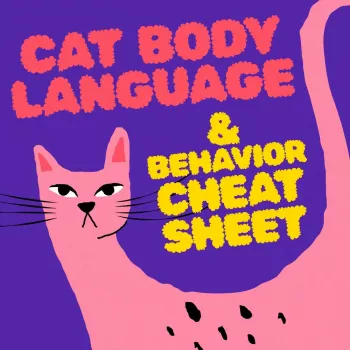
Cat Body Language & Behavior: A Fridge-Ready Guide to Signals, Postures, and Meows
Cats communicate constantly—often without a sound. Learning to read ears, eyes, tail, posture, and vocal patterns helps prevent bites and scratches, reduces stress, and strengthens everyday handling (feeding, play, vet visits, introductions). This guide breaks feline communication into quick, practical cues that are easy to reference at home.
How Cats Communicate: The Full “Signal Stack”
Cats rarely rely on one cue. The most accurate read comes from combining body posture, facial expression, tail position, and context—like a new visitor, a loud appliance, a play session, or possible pain.
- A single behavior can mean different things depending on the rest of the body. A twitching tail during petting can signal overstimulation; during play it can signal focus and excitement.
- Start with distance and safety: observe first, then approach only if the cat’s body looks loose and curious.
- Use a simple order for reading: (1) overall posture, (2) ears and eyes, (3) tail, (4) movement, (5) vocalizations.
If you want a one-page reference that’s easy for the whole household to follow, consider the Printable Cat Body Language & Behavior Cheat Sheet to keep on the fridge or in a pet-sitter folder.
Ears, Eyes, and Whiskers: Fast Clues from the Face
The face is often your earliest “warning light.” Before hands reach in, check ears, eyes, and whiskers together.
- Ears forward and swiveling: engaged and curious; usually a good time for play or gentle interaction.
- Ears sideways (“airplane ears”): uncertainty or irritation; slow down and give space.
- Ears pinned back/flat: fear or defensive aggression; avoid reaching over the head and reduce stimuli.
- Slow blinks and soft eyes: relaxed social signal; respond with a slow blink and calm voice.
- Hard stare with a still body: tension or potential conflict; break eye contact and create distance.
- Whiskers forward: interest (food, toy, exploring). Whiskers pulled back/flat: stress, discomfort, or fear.
When meeting a shy cat, offer a stationary “sniff check” (a relaxed hand held low). Let the cat close the distance instead of leaning in.
Tail and Posture: What the Body Is Saying
Tail position plus overall muscle tension is one of the fastest ways to predict whether interaction will go well.
- Tail held upright with a slight hook at the tip: friendly confidence—often a “hello.”
- Tail low or tucked: fear, insecurity, or pain; prioritize quiet and safe hiding spaces.
- Tail puffed: high arousal (fear or excitement); pause interaction and reduce triggers.
- Fast tail lashing: agitation; stop petting, stop crowding, and end the interaction before escalation.
- Loose, wiggly body and bouncy movements: playful mood; offer wand-toy play rather than hands.
- Crouched, tense body with weight shifted back: ready to bolt or defend; do not corner—create an escape route.
A practical rule: when the body looks “spring-loaded” (tight muscles, tucked limbs, fixed attention), assume the cat needs space or a safer outlet (like a toy) before touch.
Common Postures and What to Do Next
Quick Decode: Posture → Emotion → Best Response
| Posture | Likely meaning | Best next step |
|---|---|---|
| Loose body, tail upright | Friendly/curious | Offer a hand to sniff; gentle petting if invited |
| Crouched low, ears back | Fear/uncertainty | Give space; reduce noise; allow escape |
| Arched back, fur raised | High arousal (fear/defense) | Do not approach; remove trigger; let the cat decompress |
| Sideways hop (“Halloween cat”) | Play or mixed arousal | Redirect to wand toy; keep hands away |
| Tense body, tail lashing | Overstimulated/irritated | Stop contact; end interaction; provide calm downtime |
| Belly exposed, paws ready | Trust with boundaries | Avoid belly rubs; offer cheek/chin scratches |
Meows, Purrs, and Other Sounds: Interpreting Cat Vocalizations
If you track behavior changes with photos or notes (especially during introductions or after a move), keeping your phone accessible can help. A simple mount like the Magnetic 15W Wireless Car Charger & Phone Mount for iPhone 16–13 can be handy for vet trips or pickups, when hands-free directions matter.
Red Flags: When Body Language Suggests Pain or Illness
For deeper, evidence-based guidance, see the American Association of Feline Practitioners (AAFP) — Feline Behavior Guidelines, the Cornell Feline Health Center, and the RSPCA guide to cat body language.
A Printable Cheat Sheet for Daily Use
For an easy, fridge-ready format, the Cat Body Language & Behavior Cheat Sheet | Printable Cat Communication Guide keeps the most common signals and responses in one place. If your cat prefers minimal handling, a gentle, snag-reducing brush for quick, low-drama grooming sessions can help keep routines calm; the Detangling Loop Hair Brush for Wet, Dry & Natural Hair is a simple option for light, careful brushing when your cat tolerates it (always stop if the tail starts lashing or the skin ripples).
FAQ
Why does a cat show its belly but bite when touched?
Belly-up often signals trust and comfort, but many cats still protect the belly as a vulnerable area. Stick to safer zones like cheeks, chin, and shoulders, and stop if you see tail flicking, skin twitching, or tense paws.
Is purring always a sign a cat is happy?
No—purring can also be a self-soothing behavior during stress or pain. If purring comes with hiding, reduced appetite, a hunched posture, or new sensitivity to touch, a veterinary check is a good next step.
What does it mean when a cat’s tail is flicking during petting?
Tail flicking during petting often means arousal is rising toward irritation or overstimulation. Pause contact, give the cat space, and keep future sessions shorter to prevent swats or bites.











Leave a comment