Homework Help Made Easy: Routines & Study Habits for Kids
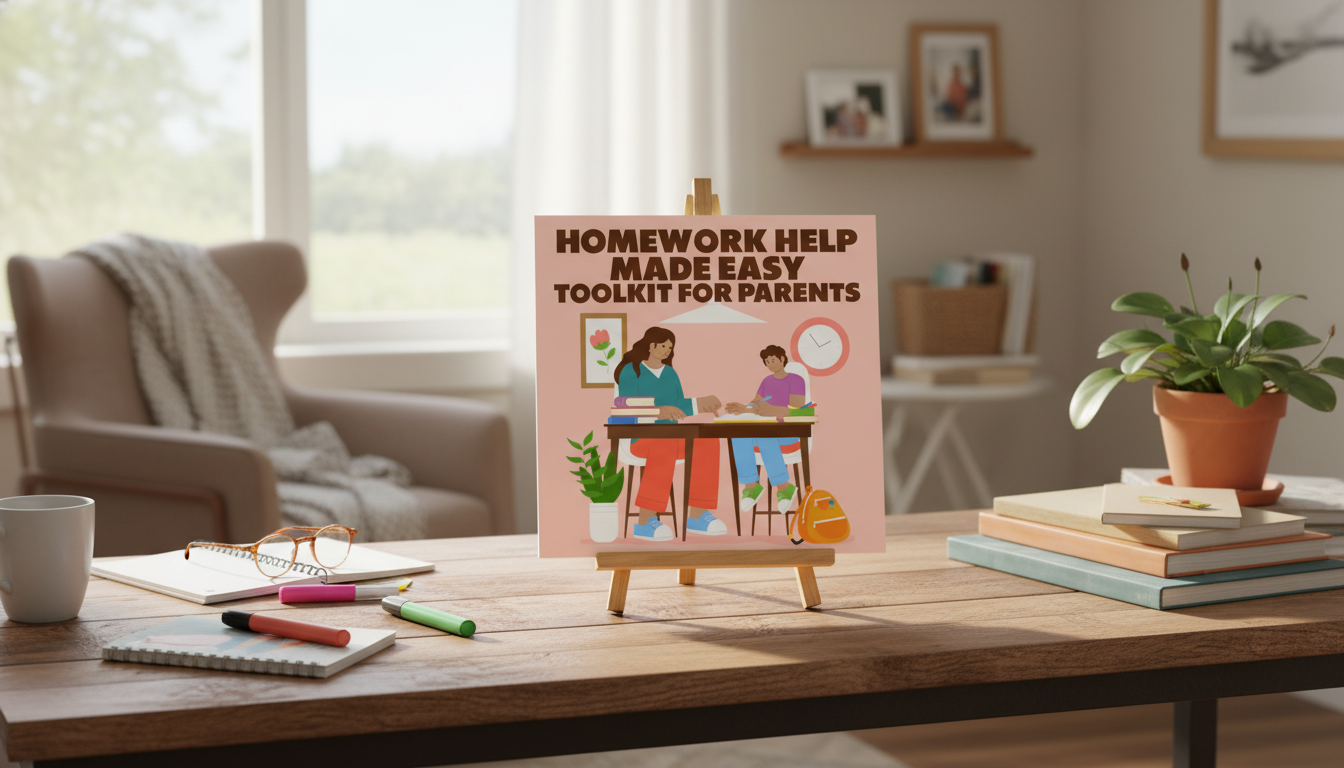
Homework Help Made Easy: A Parent Toolkit for Study Habits, Homework Routines, and Independent Learning
Homework runs smoother when expectations are clear, routines are consistent, and kids feel capable of working on their own. The goal isn’t to hover or rescue—it’s to build a repeatable system that lowers stress, improves follow-through, and gradually shifts responsibility to the student. Below are practical, parent-friendly strategies (plus simple printable-style tools) that help homework feel more predictable on busy weeknights.
What “homework help” should look like at home
Effective homework help is support without takeover. When parents do the thinking, organizing, and checking, kids lose the chance to practice those skills themselves. Aim for just enough guidance to keep momentum—then hand the work back.
- Support without taking over: clarify directions, model one example, then step back while your child completes the next one.
- Treat homework as practice, not a performance: mistakes show what needs reteaching; they’re not a character flaw.
- Make the process predictable: same time, same place, same steps whenever possible.
- Focus on skill-building: planning, starting, checking work, and asking for help appropriately are “hidden” homework skills that matter in every subject.
For research-backed guidance on study skills and learning routines, the American Psychological Association (APA) resources on learning and study skills are a helpful reference point.
Set up a homework routine that actually gets followed
Consistency beats intensity. A realistic routine is one your family can repeat even on tired days—especially on tired days.
- Pick a consistent start time anchored to an existing habit (snack, after-school break, or after dinner).
- Create a “ready-to-start” checklist: materials out, device charged, distractions minimized, water nearby.
- Use short work blocks with quick resets: many kids focus better with planned breaks than with open-ended sessions.
- End with a closing routine: pack the backpack, place finished work in one spot, preview tomorrow’s tasks.
Simple routine blueprint (customize by age and workload)
| Step | What the parent does | What the student does | Typical time |
|---|---|---|---|
| Reset | Offer a brief break and snack; keep it time-bound | Decompress, then come to the workspace | 10–20 min |
| Plan | Ask guiding questions, avoid directing every choice | Write tasks, pick an order, estimate time | 5 min |
| Work block 1 | Stay nearby but not hovering | Work independently; mark any confusing items | 15–25 min |
| Check-in | Review only what’s needed (directions, one sample, or a quick scan) | Explain what’s done and what’s next | 2–5 min |
| Work block 2+ | Encourage persistence and problem-solving | Continue; use breaks as planned | 15–25 min each |
| Close | Confirm items are packed and turned in | Do a final check, pack, and set out materials | 3–5 min |
Build study habits with printables (without nagging)
“Nagging” usually means a system is missing. When kids can see the plan and track progress, parents can switch from reminders to brief check-ins.
- Weekly overview: list tests, projects, and activity nights in one place to prevent last-minute surprises.
- Daily “top three”: reduce overwhelm by identifying the three most important tasks first.
- Time estimation practice: compare “predicted minutes” vs. “actual minutes” to improve planning over time.
- Track patterns, not perfection: notice repeat friction points (time of day, subject, fatigue) and adjust supports.
If you want a ready-to-use set that ties these pages into one repeatable system, consider the Homework Help Made Easy Toolkit for Parents – Printable Guide for Creating Study Habits, Homework Strategies & Independent Learning.
Homework strategies that reduce conflict and increase follow-through
When emotions run high, aim for calmer wording and smaller next steps. Your tone sets the “temperature” of the room, especially during challenging subjects.
For additional classroom-aligned ideas on homework and home support, Edutopia’s research-informed resources can be a useful supplement.
Growing independent learning: a gradual release plan
Problem-solving common homework roadblocks
Using the printable toolkit day-to-day
If a phone is part of your child’s workflow (planner photos, school portal logins, timers), protecting it can reduce “I can’t do my homework” interruptions. The Magnetic Clear Shockproof Case for iPhone 17 Pro & Pro Max can help keep devices usable, and a commuter-friendly option like the Magnetic 15W Wireless Car Charger & Phone Mount for iPhone 16–13 supports families juggling activities and homework on the go.
Printable resource: Homework Help Made Easy Toolkit for Parents
A ready-to-use printable set designed to support consistent routines, practical homework strategies, and independent learning skills can remove a lot of nightly decision fatigue. The Homework Help Made Easy Toolkit for Parents – Printable Guide for Creating Study Habits, Homework Strategies & Independent Learning works best when introduced gradually and used consistently until the routine becomes automatic.
For broader home-learning support approaches, you can also explore tips from the Harvard Graduate School of Education.
FAQ
How much homework help should a parent give?
Offer enough help to clarify directions and model a starting point, then step back. Use check-ins at set times instead of constant supervision so your child practices managing tasks.
What if homework time turns into arguments every night?
Make the routine predictable, shorten the first work block, and use neutral prompts focused on the next step. Track when conflicts happen (time, subject, fatigue) and adjust timing and supports.
How can kids learn to work independently without feeling abandoned?
Use gradual release: stay nearby at first, then move to scheduled check-ins. Provide tools like checklists and timers so your child has a process to follow when they get stuck.










Leave a comment