Minimalist Packing Planner: A Digital Guide to Pack Light
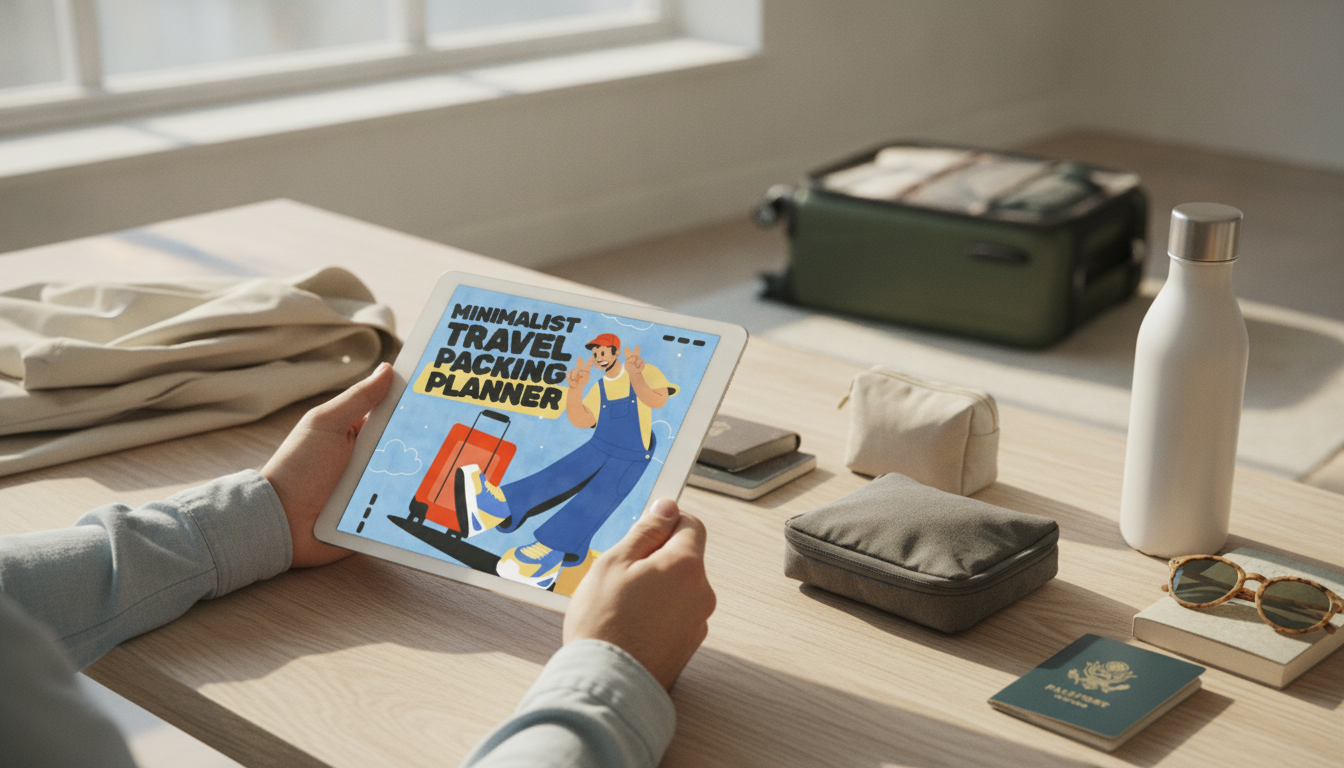
Minimalist Travel Packing Planner: Pack Light, Stay Organized, Travel Calm
Packing light is less about owning fewer things and more about making clear decisions fast—what to bring, what to skip, and how to avoid last-minute overpacking. A digital packing planner turns that decision-making into a simple system that fits different trip lengths, climates, and travel styles without the stress. Instead of rebuilding a list from scratch every time, you start with a clean structure, adjust for the trip, and pack with confidence.
Why minimalist packing works (and why it feels hard at first)
Minimalist packing works because it reduces the number of micro-decisions that drain your energy before you even leave home. When you limit duplicates and “just in case” items, you also limit the mental load of tracking them.
- Reduces decision fatigue by limiting duplicates and “just in case” items
- Makes airport days easier: lighter bag, faster transitions, fewer things to track
- Creates a repeatable routine so each trip takes less time to prepare
- Common obstacles: unclear outfits, fear of forgetting essentials, and toiletry clutter
The hardest part is the beginning: it can feel risky to bring less. That’s usually not a lack-of-items problem—it’s a lack-of-plan problem. Once you can see your outfits, essentials, and rules in one place, “light” starts to feel safe.
What a digital packing planner changes
A digital packing planner replaces scattered notes and mental checklists with one structured plan. Instead of packing the same way for every trip, it supports trip-specific decisions: weather, activities, laundry access, baggage limits, and even how many “nice” outfits you actually need.
- Replaces scattered notes and mental checklists with one structured plan
- Supports trip-specific packing (weather, activities, laundry access, baggage limits)
- Encourages intentional choices: items must “earn” space by solving a real need
- Helps standardize essentials so only the variable items change each trip
Digital planner vs. generic checklist
| Feature | Generic checklist | Minimalist digital packing planner |
|---|---|---|
| Adapts to trip length and activities | Rarely | Yes—built around context and scenarios |
| Helps prevent overpacking | Limited | Yes—focuses on multi-use and outfit planning |
| Reusable and editable | Sometimes | Yes—copy, adjust, and reuse for future trips |
| Tracks what’s already packed | Manual and inconsistent | Structured tracking to reduce missed items |
| Supports stress-free prep timeline | No | Yes—breaks packing into manageable steps |
Minimalist Travel Packing Planner: what it’s designed to help with
The goal isn’t to pack “as little as possible.” The goal is to pack exactly what you’ll use—no more, no less—so your bag stays light and your trip stays calm. A structured planner helps you cover essentials while removing low-value extras.
- Building a complete packing list without adding unnecessary extras
- Outfit planning that avoids “nothing to wear” while keeping the wardrobe small
- Toiletries and carry-on compliance planning (liquids, sharp objects, medications)
- Pre-trip preparation: documents, reservations, chargers, and day-of-travel essentials
- Reducing last-minute shopping by auditing what’s already available at home
If you want a ready-to-use system you can reuse for weekend trips, work travel, and longer vacations, the Minimalist Travel Packing Planner (digital guide) is designed to be copied, edited, and refined as you learn what you actually use.
How to use a minimalist packing system in 20 minutes
When time is tight, don’t start with items—start with parameters. A minimalist system works best when it begins with constraints.
- Define the trip parameters: number of days, climate, dress code, laundry access, and bag size.
- Choose a core color palette: pick 2–3 main colors and keep shoes to 2–3 pairs maximum (often 1–2 is enough).
- Plan outfits by activities: travel day, daytime, evening, workout, and a rain/cold layer scenario.
- Select multi-use items: a layer that works on planes and at dinner; pants that dress up or down.
- Pack essentials last and keep them together: documents, medications, phone, wallet, and keys should live in one consistent spot.
This approach makes it obvious when an item doesn’t belong: if it doesn’t fit the palette, match at least two outfits, or solve a real scenario, it doesn’t earn space.
Smart packing rules that keep the bag light
Toiletries and carry-on basics (without the clutter)
For U.S. airport screening rules, confirm current guidance with the TSA liquids rule and the FAA PackSafe tool for restricted items.
Tech and documents: the minimalist approach
If you’ll be driving at any point, keeping your phone visible and charged reduces friction on travel days. The Magnetic 15W Wireless Car Charger & Phone Mount supports simple, cable-light navigation for compatible iPhones.
A simple stress-free packing timeline
Over time, the list becomes a personal template: essentials stay stable, and only the variables change. For broader trip prep reminders (vaccines, local considerations, and destination-specific guidance), the CDC Travelers’ Health resource is a useful checkpoint.
FAQ
How many outfits are enough for a one-week trip?
For most one-week trips, 3–5 tops, 2 bottoms, and 1–2 layers is a practical range, adjusting for weather and formality. If you have laundry access (or quick-dry fabrics), you can pack fewer and rewear confidently by rotating outfits.
What should always go in a carry-on even if checking a bag?
Always keep medications, documents/ID, valuables, chargers, and a small set of essentials (like one change of clothes and key hygiene items) in your carry-on. Delays and lost luggage are easier to handle when the non-negotiables stay with you.
How can overpacking be avoided without feeling unprepared?
Plan by activities instead of “what if” scenarios, choose multi-use items, and set a firm space limit based on your bag. Leaving a little empty room often feels more prepared than packing for every possibility because it gives you flexibility.









Leave a comment