Critical Thinking eBook: Problem-Solving Tools & Teasers
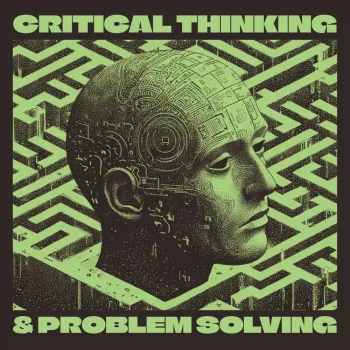
Critical Thinking & Problem Solving: A Digital eBook for Smarter, Calmer Decisions
Smarter decision making isn’t reserved for “geniuses.” It’s usually the result of repeatable habits: noticing assumptions, testing ideas with small experiments, and choosing actions with clear trade-offs. The Critical Thinking & Problem Solving eBook – Digital Download Guide for Smarter Decision Making is designed as a practical guide you can actually use—combining critical thinking tools, problem-solving frameworks, and brain teasers that strengthen everyday reasoning for work, school, and real life.
Instead of treating “critical thinking” like a vague virtue, this eBook makes it concrete: you’ll practice separating facts from interpretations, spot common cognitive traps, and build a reliable approach for moving from confusion to clear next steps.
What This Digital eBook Helps Build
- Clearer thinking under pressure by separating facts, interpretations, and emotions
- Structured problem solving that turns vague issues into testable next steps
- Better decisions by weighing risks, opportunity costs, and second-order effects
- Sharper pattern recognition and logic through brain teasers and short challenges
- Transferable life skills: communication, prioritization, and judgment calls
Many people try to “think harder” when stressed. This guide leans the other way: use structure so you don’t have to rely on raw willpower. A good framework reduces mental noise and makes it easier to explain your reasoning to others (or to future-you).
Who It’s For (and When It Helps Most)
- Students: analyzing arguments, avoiding common reasoning traps, and studying more effectively
- Professionals: making defensible decisions, planning projects, and diagnosing recurring bottlenecks
- Entrepreneurs and managers: evaluating options, reducing bias in meetings, and clarifying uncertainty
- Anyone feeling “stuck”: turning overwhelm into a clear list of options and next actions
- Brain-teaser fans: puzzles tied to real-world reasoning skills
It’s especially useful when the “right answer” isn’t obvious—when you’re dealing with incomplete information, competing priorities, and social pressure to decide quickly.
Core Skills Covered: From Questions to Conclusions
- Problem framing: defining the real question, the goal, and the constraints
- Evidence checks: credibility, relevance, sample size intuition, and missing information
- Logic basics: necessary vs. sufficient conditions, valid vs. persuasive arguments
- Bias awareness: confirmation bias, anchoring, sunk cost, and availability effects
- Decision hygiene: pre-mortems, checklists, and simple scoring models
These skills align with well-known research and references on judgment and reasoning, including Daniel Kahneman’s work on how fast and slow thinking interact (Thinking, Fast and Slow) and foundational definitions of logical consequence (Stanford Encyclopedia of Philosophy). For a clear description of confirmation bias, see the APA Dictionary of Psychology.
Quick Skill Map: Common Challenges and Useful Tools
| Situation | What Usually Goes Wrong | Tool to Try |
|---|---|---|
| Too many options | Decision fatigue; chasing the “perfect” choice | Set criteria first; score options 1–5 against each criterion |
| Team disagreement | Arguing conclusions instead of assumptions | List assumptions; test the most uncertain one first |
| Repeated mistakes | Blaming effort instead of process | After-action review: what was expected, what happened, what changes next time |
| High-stakes choice | Overconfidence; ignoring downside | Pre-mortem: imagine failure, then design safeguards |
| Brain teaser stuck | Fixating on one approach | Switch representations: draw it, make a table, or restate the puzzle |
Brain Teasers That Translate to Real Decisions
Brain teasers can be more than entertainment when you treat them like skill drills. The point isn’t to “be clever”—it’s to practice the same moves that improve real decisions:
- Clarifying the goal and constraints before taking action
- Listing what’s known vs. assumed
- Testing small cases or simplified versions first
- Generalizing a pattern only after the pieces actually fit
The eBook emphasizes debriefing: after you solve (or fail) a puzzle, you summarize the method you used and identify where it applies. That’s the bridge from puzzles to workplace planning, academic reasoning, and everyday trade-offs.
How to Use the eBook as a 2–4 Week Practice Plan
- Week 1: Problem framing and asking better questions (daily 10–15 minutes)
- Week 2: Evidence and argument quality—practice distinguishing data from interpretations
- Week 3: Decision tools—criteria, trade-offs, risk, and contingency planning
- Week 4: Mixed drills—brain teasers + real-life scenarios (work, money, relationships, learning)
- Simple tracking: keep a short decision journal with the question, options, choice, and outcome
Even a small routine can create momentum. Awareness often improves within days (“Oh, that’s anchoring”), while better judgment shows up over weeks as the habit of checking assumptions becomes automatic.
Digital Download Details and What to Expect
Product Option: Critical Thinking & Problem Solving eBook (Digital Download)
Title: Critical Thinking & Problem Solving eBook – Digital Download Guide for Smarter Decision Making, Brain Teasers & Life Skills Ebook
Price: $27.99 (USD)
Availability: In stock
More In-Stock Picks That Support Better Daily Decisions
- Magnetic 15W Wireless Car Charger & Phone Mount for iPhone 16–13 — reduces distraction and keeps navigation/notes accessible when you’re on the move.
- Detangling Loop Hair Brush for Wet, Dry & Natural Hair — a small example of “remove friction,” the same principle behind good checklists and workflows.
- Magnetic Clear Shockproof Case for iPhone 17 Pro & Pro Max — protects the device you’ll likely use for journaling decisions, reading, and quick practice drills.
FAQ
Is this eBook suitable for beginners with no formal logic background?
Yes. The material builds step-by-step and focuses on practical exercises and everyday examples rather than heavy technical jargon, so you can apply the ideas immediately.
How much time does it take to see improvement in decision making?
Many people notice better awareness of biases and assumptions within a few days, while stronger decision habits typically develop over a few weeks. A short daily routine plus a simple decision journal speeds up the payoff.
Will the brain teasers help with real-life problem solving or are they just for fun?
They help when you debrief them into principles—constraints, assumptions, and systematic testing—and then reuse the same moves on real choices. The goal is transferring the method, not memorizing puzzle tricks.










Leave a comment