Toddler Nightmares: A Calm Script + Bedtime Fixes
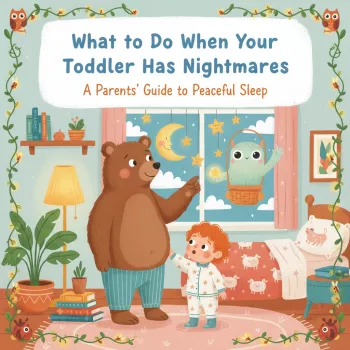
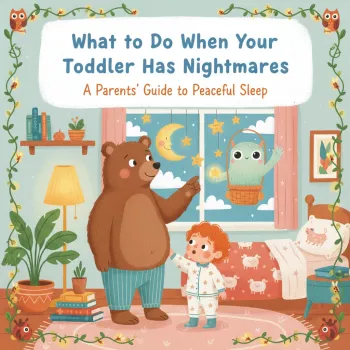
Nightmares can feel intense for toddlers and exhausting for parents. A calm, repeatable response at night—paired with steady daytime habits—often reduces both the frequency of scary dreams and the length of wake-ups, helping everyone get back to sleep sooner.
Nightmares vs. Night Terrors: Why It Matters
Not all “bad dreams” are the same. Knowing whether you’re dealing with nightmares or night terrors helps you choose the right response—more comfort and connection for nightmares, more safety and minimal stimulation for night terrors.
| Feature | Nightmares | Night terrors |
|---|---|---|
| Typical timing | Later night / early morning | First third of the night |
| Child wakes fully | Often yes | Often no |
| Comfort works | Usually yes | Often not in the moment |
| Memory next day | Sometimes/yes | Usually none |
| Best parent response | Reassure, soothe, reset to sleep | Keep safe, stay calm, wait it out |
- Nightmares usually happen in the second half of the night; toddlers often wake fully, remember scary images, and want comfort.
- Night terrors often happen earlier in the night; a child may scream, look awake, and be hard to console, but won’t remember it in the morning.
- Respond differently: nightmares call for reassurance and connection; night terrors call for safety and minimal stimulation while the episode passes.
- If episodes are frequent, intense, or paired with snoring, breathing pauses, or daytime sleepiness, consider discussing sleep quality with a pediatrician.
In-the-Moment Nighttime Response (A Simple Script)
When your toddler cries out, the goal is to communicate safety without accidentally “turning on the daytime brain.” Keep it brief, consistent, and boring-in-a-good-way.
- Pause before speaking: take one slow breath to keep your voice steady and your body relaxed.
- Check basic needs quickly: room temperature, wet diaper/pull-up, a sip of water if needed, comfort item within reach.
- Use a short reassurance script: “That was a scary dream. You’re safe. I’m right here. Let’s help your body feel calm.”
- Keep lights low and words few: avoid detailed dream “investigations” at 2 a.m. that can increase alertness.
- Offer brief grounding: hand on back, three slow breaths together, or a quiet “squeeze-hug” routine—then back to bed with the same closing phrase.
- If they demand to leave the room: try a timed compromise (30–60 seconds of cuddling in their room), then return to bed and repeat the same calm steps.
Comfort Tools That Help Toddlers Settle Faster
Tools work best when they’re familiar. Introduce them during the day or at bedtime—then use the same tools during a wake-up so your toddler knows exactly what happens next.
- Create a bedside “calm kit”: a lovey, small night light, soft blanket, and a simple picture card showing calming steps (hug, breathe, sip, back to bed).
- Teach one calming skill in daylight: practice “smell the flower, blow the candle” breathing or a gentle body scan (“toes relax… legs relax…”).
- Use a consistent bedtime phrase: repeating the same words at lights-out and after nightmares signals predictability and safety.
- Support fear of the dark without over-brightening: a dim night light, hallway light cracked, or a familiar soft sound can help—without making the room feel like daytime.
- Avoid big rewards during wake-ups: extended talking, games, or snacks can accidentally train more wake-ups because the night becomes “interesting.”
Bedtime Routine Adjustments That Reduce Scary Dreams
Nightmares often spike when toddlers are overtired, overstimulated, or processing big changes. A predictable wind-down helps their nervous system “downshift” before sleep.
- Protect the wind-down window: keep a consistent start time and simple sequence (bath, pajamas, books, cuddle, lights out).
- Reduce overstimulation 60–90 minutes before bed: loud play, intense chase games, and scary media can spill into dreams.
- Choose soothing stories and songs: if a favorite book has monsters or tense conflict, swap it for calmer choices for a couple weeks.
- Try a brief “worry-to-bed” transition: ask one gentle question (“Anything you want to tell me before sleep?”), then close with predictable reassurance.
- Check nap timing: overtired toddlers can wake more at night; very late naps can also disrupt nighttime sleep.
Daytime Habits That Build Nighttime Resilience
When to Get Extra Help
For additional sleep guidance, see the American Academy of Pediatrics resources on healthy sleep habits, the National Sleep Foundation overview of parasomnias (including nightmares and night terrors), and KidsHealth’s parent guide to nightmares.
A Guided Plan for Parents Who Want a Clear, Repeatable Approach
Helpful picks (in stock)
- What to Do When Your Toddler Has Nightmares | Ebook Guide for Parents | Practical Comforting Tips & Bedtime Solutions
- Magnetic 15W Wireless Car Charger & Phone Mount for iPhone 16–13 (useful for hands-free audio during commutes or calming bedtime playlists)
- Detangling Loop Hair Brush for Wet, Dry & Natural Hair (a quick, low-stress pre-bed grooming step can keep the wind-down routine smoother)
FAQ
How long do toddler nightmares usually last?
A single nightmare often settles within a few minutes with calm reassurance and a predictable return-to-bed routine. Clusters can last days to weeks during developmental changes, stress, illness, or schedule disruptions, so consistency and tracking patterns usually help.
Should a toddler sleep in the parents’ bed after a nightmare?
Occasional exceptions may be necessary, but frequent “nightmare-to-parents’-bed” patterns can become a hard-to-break habit. Comforting your toddler in their room, then returning them to bed with the same brief routine, often preserves both reassurance and boundaries.
What if a toddler keeps talking about monsters or scary dreams during the day?
Validate the feeling (“That sounds scary”) and practice a simple coping plan in daylight (breathing, a comfort phrase, or “brave play” with stuffed animals). Limiting scary media and keeping routines predictable can reduce how often the fear shows up, and escalating or persistent anxiety is worth discussing with a pediatrician or child professional.











Leave a comment