Portable Car Air Compressor Power Bank & Flashlight Guide
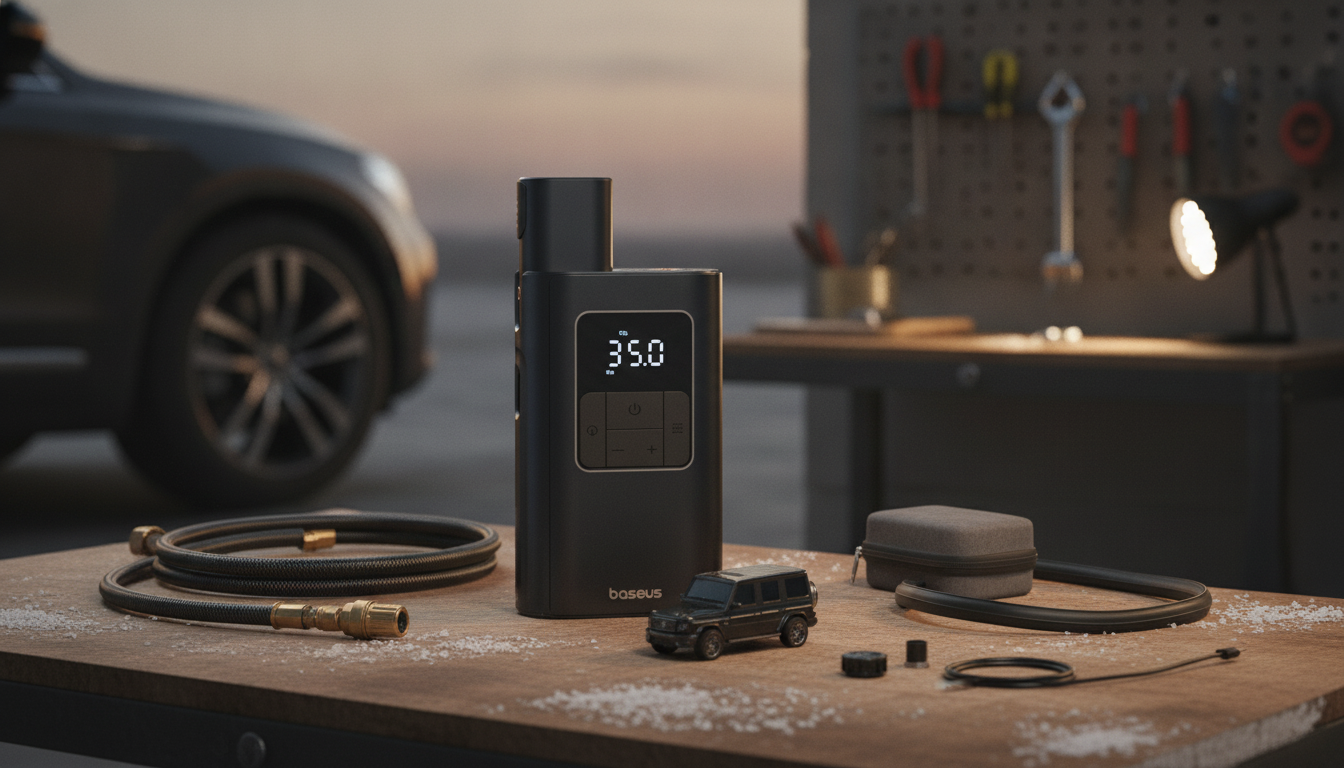
A compact tire inflator that also works as a power bank and emergency flashlight can simplify roadside prep—especially for daily drivers, road-trippers, and anyone who wants a fast way to correct tire pressure without hunting for a station. This guide breaks down what the device does best, what to check before buying, and how to use it safely and effectively.
What This 3-in-1 Device Is Designed to Solve
A portable compressor with an onboard battery and light is built for the moments when small problems become big hassles—like a low-tire warning right before work, or needing light and phone power on the shoulder at night.
- Restores tire pressure quickly for cars, motorcycles, and many everyday inflatables (depending on included nozzles).
- Reduces the need to rely on gas-station pumps, which can be slow, inaccurate, or out of service.
- Provides backup phone power when driving, camping, or during power outages.
- Adds a flashlight for roadside visibility, trunk checks, and emergency signaling.
If you want a compact option that combines these essentials, see the 2-in-1 Portable Car Air Compressor with Power Bank & Flashlight (in stock).
Key Features That Matter in Real Use
Specs are helpful, but day-to-day usability comes down to how quickly you can set pressure, confirm the reading, and pack the unit away without a mess of parts.
- Portable air compressor: stable output, clear pressure readout, and straightforward controls for quick top-offs.
- Power bank function: useful for topping up a phone, wireless earbuds, or small USB devices while on the move.
- Built-in flashlight: improves safety when checking tires at night or in low-visibility conditions.
- Compact form factor: easier to store in a glove box, trunk organizer, or emergency kit.
- Accessory support: adapters/nozzles expand use beyond car tires (bike tires, balls, and other inflatables).
Quick feature checklist
| Feature | Why it matters | Practical tip |
|---|---|---|
| Digital pressure display | Helps hit the correct pressure without guessing | Compare to the door-jamb sticker pressure (cold tires) |
| Auto-stop / preset modes (if available) | Prevents over-inflation and saves time | Set desired PSI before attaching to the valve |
| Power bank USB output | Keeps essential devices running | Carry the right cable (USB-C/Lightning) in the same pouch |
| Flashlight modes | Improves visibility and roadside safety | Use hazard lights plus the flashlight for layered visibility |
| Multiple nozzles/adapters | Covers more use cases than tires alone | Store adapters in a small zip bag to avoid losing them |
| Heat and duty-cycle handling | Sustains performance during longer jobs | Let the unit cool if inflating multiple tires in a row |
When a Portable Compressor Helps Most
- Seasonal temperature swings: pressure drops in cold weather can trigger warnings and reduce handling.
- Slow leaks: frequent top-offs can buy time until a repair appointment (not a substitute for fixing the leak).
- Road trips: avoids detours and long waits at busy service stations.
- Emergency preparedness: pairs well with a tire plug kit, gloves, reflective triangle, and first-aid kit.
- Outdoor use: inflating bike tires, sports balls, and other small inflatables when supported by included tips.
For tire safety basics and why pressure matters, reputable references include NHTSA’s tire guidance and Bridgestone’s overview of how to check tire pressure.
How to Use It for Accurate Tire Pressure
Accurate inflation starts with the right target PSI and a consistent method. Most “my tires feel fine” problems come from using the wrong number or checking after the tires are hot.
- Find the correct PSI: use the driver-side door-jamb label (or owner’s manual). Aim for the “cold tire” recommendation whenever possible.
- Attach firmly: remove the valve cap and lock the inflator connector securely so air doesn’t hiss out around the fitting.
- Inflate and let the reading settle: if using manual control, inflate in short bursts and pause a moment so the display stabilizes.
- Stop at the target: detach promptly and reinstall the valve cap to keep debris out of the valve.
- Don’t chase hot-tire numbers: after driving, pressure rises with heat; cold-tire specs remain the best baseline.
Underinflation can affect handling and efficiency, and maintaining correct pressure is widely recommended by major tire manufacturers (see Michelin’s notes on tire pressure, safety, and fuel economy).
Safety and Maintenance Essentials
Who This Is Best For (and When to Choose Something Else)
Recommended Add-Ons for a Better Roadside Kit
For a convenient charging setup while driving, pair your kit with the Magnetic 15W Wireless Car Charger & Phone Mount for iPhone 16–13 (in stock), so your phone stays visible and powered during long routes.
FAQ
Can a portable air compressor fix a flat tire?
It can temporarily inflate a tire if it’s only low or has a slow leak, helping you get to a safer location or a repair shop. It can’t repair punctures, bead leaks, or sidewall damage, so a proper tire repair or replacement is still needed.
What PSI should tires be inflated to?
Use the vehicle’s recommended pressure listed on the driver-side door-jamb label (ideally measured on cold tires). Don’t use the tire sidewall maximum as the everyday target for normal driving.
How long should a portable inflator run at a time?
Run time depends on the unit’s duty cycle and heat buildup. For multiple tires, inflate in shorter sessions and let the compressor cool if it becomes hot, following the guidance in the device manual.








Leave a comment