30-Bin Wall Parts Organizer with Rack & Panels
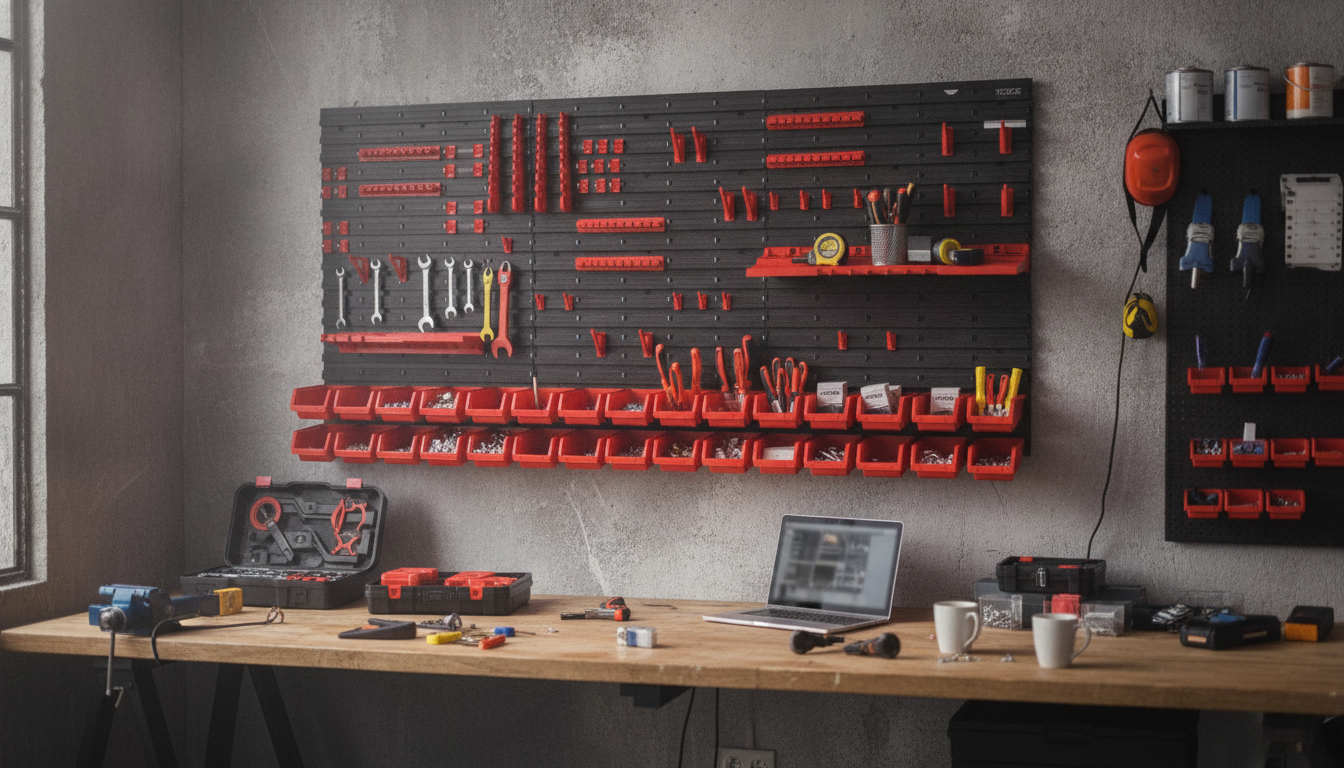
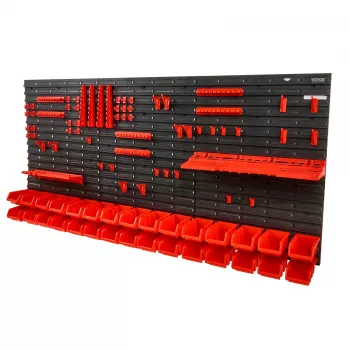
30-Bin Wall Mounted Parts Organizer with Storage Rack & Panels
Small parts have a way of disappearing into drawers, cups, and cardboard boxes—right when a project needs them most. A wall-mounted bin system keeps fasteners, fittings, craft supplies, and repair items visible, sorted, and easy to grab, while freeing up bench space for actual work.
If you’re building a dedicated “small parts zone” in a garage, workshop, craft room, or utility area, the 30-Bin Wall Mounted Parts Organizer with Storage Rack & Panels is designed to put your everyday hardware and supplies where your hands naturally reach—without turning your work surface into a staging pile.
What This Organizer System Includes
This setup focuses on vertical storage: a panel-based layout that keeps bins off the bench and in clear view. Instead of digging through mixed containers, you get separate bins for distinct items and a rack area for grab-and-go storage.
- Wall-mountable panel layout designed to keep bins off the work surface and within reach
- 30 individual bins for separating parts by size, type, or project
- Integrated storage rack area for frequently used items and quick drop-in storage
- Modular approach: expand the system by adding additional panels or grouping multiple units side-by-side
- Clear visual organization: bins create a “one glance” inventory of what’s available
At-a-Glance Breakdown
| Component | Purpose | Common Use Examples |
|---|---|---|
| Wall panels | Mounting surface for bins and rack | Garage walls, shed framing, workshop peg areas |
| 30 bins | Sort and store small parts | Screws, anchors, nails, washers, O-rings, terminals |
| Storage rack section | Quick-access shelf-style storage | Tape, markers, small boxes, glue, frequently used tools |
| Wall-mounted design | Frees bench space and improves visibility | Assembly stations, hobby tables, repair corners |
Where It Works Best: Garage, Shop, Craft Room, and Utility Spaces
A bin-and-panel system is most useful wherever “small and essential” items live—especially when those items get purchased in bulk, used in small quantities, and then forgotten until the next job.
- Garage and workshop: keep hardware separated (wood screws vs. machine screws, metric vs. SAE) to reduce mis-grabs.
- Home repair station: dedicate bins to electrical connectors, picture-hanging kits, wall anchors, and plumbing spares.
- Craft and maker areas: organize beads, findings, thread bobbins, small paint jars, vinyl offcuts, and 3D printing nozzles.
- Small business storage: label bins for SKUs, packing add-ons, and replacement parts to speed fulfillment.
- Mobile workflow support: stage the day’s parts in a few bins while keeping the rest stored and labeled on the wall.
For broader shop organization ideas, these guides are helpful references: Family Handyman — Garage Storage and Organization Ideas and This Old House — Garage Organization Tips.
Layout Ideas That Prevent the “Mixed-Bin” Problem
The fastest way for any organizer to fail is “bin drift”—when parts get tossed into the closest empty spot. A simple layout plan reduces that risk from day one.
- Sort by task first: group bins into zones like “hanging,” “electrical,” “plumbing,” “automotive,” and “general hardware.”
- Keep most-used items at chest height: reduce bending and reach strain by placing high-turn items where they’re easiest to grab.
- Use a top-to-bottom size gradient: small/precise items (bits, terminals) higher; heavier items (bolts, larger anchors) lower.
- Dedicate one bin per fastener type and length: avoid “misc” bins except for temporary overflow.
- Reserve a few bins as project staging: empty bins act like trays that can be pulled, used, and returned.
A practical example: set the left third of the organizer as “hanging and anchors,” the center as “wood screws by length,” and the right third as “electrical connectors.” Then reserve two lower bins as rotating project bins—anything left in them at the end of the week becomes a reminder to restock or put items back into their labeled homes.
Installation and Mounting Tips for a Solid, Wobble-Free Setup
In tool-heavy areas, basic safety habits matter too. OSHA’s general guidance for safe tool use is a solid reminder to keep work areas orderly and reduce trip and cut hazards: OSHA — Hand and Power Tools (General Safety Guidance).
Daily Use: Keeping Inventory Visible and Easy to Refill
Safety and Longevity Considerations
Who This Setup Is Best For
Product Snapshot
- Model: 30-Bin Wall Mounted Parts Organizer with Storage Rack & Panels
- Designed to create a dedicated small-parts zone that keeps frequently used items visible and reachable
- Best paired with a labeling system and a simple restock routine to maintain order over time
- Helpful as a standalone unit or as the first module in a larger wall-organization layout
More In-Stock Picks You May Want to Add
- Magnetic 15W Wireless Car Charger & Phone Mount for iPhone 16–13 (handy for keeping a phone visible while working from a garage or driveway)
- Magnetic Clear Shockproof Case for iPhone 17 Pro & Pro Max (extra protection for phones used around tools and hard surfaces)
FAQ
Can the bins be rearranged after mounting the panels?
Yes. The bins are typically designed to be removable and repositionable on the mounted panels, so you can reorganize categories as your parts collection changes or as projects shift from season to season.
What’s the best way to mount a parts organizer on drywall?
Locate studs whenever possible and fasten into them for the most secure hold. If you can’t hit studs, use properly rated drywall anchors, keep heavier items in lower bins, and level the organizer before tightening everything down.
How should small parts be labeled to stay organized long-term?
Use consistent labels that list both type and size (for example, “M4 x 12mm machine screw” or “#8 x 1-1/4 in wood screw”). Optional color-coding by category helps in shared spaces, and keeping a couple bins reserved for temporary project staging prevents labeled bins from getting mixed.










Leave a comment