10 Must-See U.S. National Parks: Fast Facts & Hikes
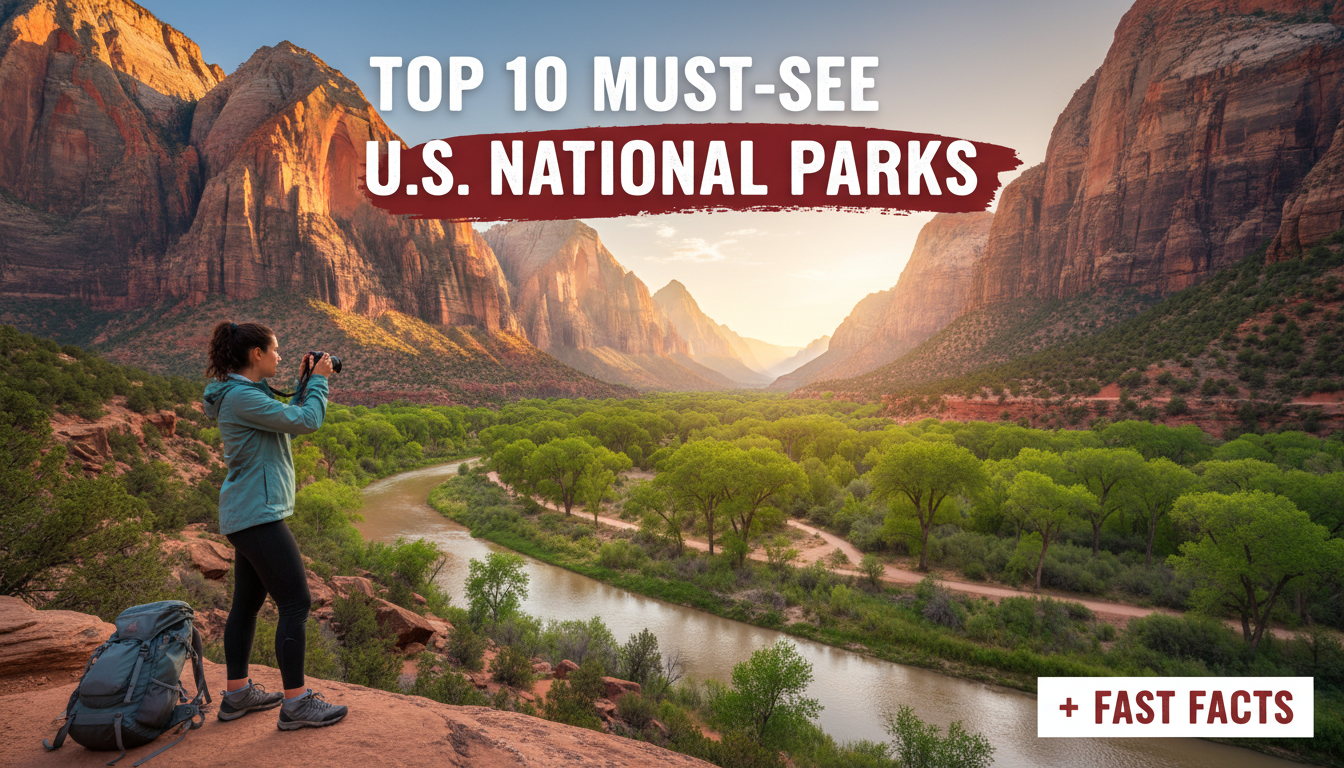
Top 10 Must-See U.S. National Parks: Fast Facts, Hike Highlights, and Trip Planning Shortcuts
Some national park trips come together in minutes; others take weeks of research across maps, permit pages, weather windows, and trail conditions. This guide-style overview gathers quick, decision-ready details for ten iconic U.S. national parks—what makes each one special, when to go, what to prioritize on a short visit, and how to plan around the realities of crowds, altitude, and seasonal closures.
A quick way to pick the right park for the right kind of trip
Start by matching the park to the experience you want: big canyon overlooks, glacier views, geothermal features, desert sunrises, or high-alpine hikes. Next, use constraints first—season, heat/snow tolerance, hiking difficulty, road closures, and whether timed entry or permits apply. A simple structure that works well is one “anchor day” (a signature viewpoint or trail) plus two flexible half-days (short hikes, scenic drives, ranger programs).
Finally, build buffers. Parking and shuttle lines can swallow an hour, afternoon storms pop up in mountain parks, and shoulder seasons may mean limited services. A little slack time often turns a stressful day into a smooth one.
Fast comparison: what each park is known for and the easiest way to sample it
| Park | Best for | Ideal season window | Signature quick win | Notes to plan around |
|---|---|---|---|---|
| Grand Canyon (AZ) | Epic viewpoints + rim walks | Spring/Fall | Sunrise at Mather Point + Rim Trail segment | Heat on inner-canyon hikes; limited shade |
| Yosemite (CA) | Waterfalls, granite cliffs | Late spring/early summer; fall | Tunnel View + Yosemite Valley loop stops | Traffic/parking; possible reservation systems |
| Zion (UT) | Canyon hikes + narrows scenery | Spring/Fall | Scenic Canyon shuttle + short Riverside Walk | Shuttle seasons; flash-flood risk in narrows |
| Yellowstone (WY/MT/ID) | Geysers + wildlife | Late spring–early fall | Old Faithful area boardwalks | Distances are huge; wildlife jams |
| Rocky Mountain (CO) | Alpine drives + high trails | Summer; early fall | Trail Ridge Road overlooks | Altitude; afternoon storms; timed entry may apply |
| Glacier (MT) | Glacial valleys + turquoise lakes | Summer–early fall | Going-to-the-Sun Road viewpoints | Seasonal road openings; reservations may apply |
| Arches (UT) | Iconic red-rock arches | Spring/Fall | Delicate Arch viewpoint or short trail | Midday heat; possible timed entry |
| Acadia (ME) | Coast + carriage roads | Summer; fall foliage | Cadillac Mountain sunrise (when allowed) + Ocean Path | Parking and peak-season congestion |
| Olympic (WA) | Rainforest, coast, mountains | Summer; late spring | Hoh Rain Forest walk + coastal viewpoint | Multiple regions; plan driving time |
| Great Smoky Mountains (TN/NC) | Wildflowers, ridgelines, waterfalls | Spring blooms; fall color | Newfound Gap Road stops + short waterfall hike | Very busy weekends; variable mountain weather |
Grand Canyon, Yosemite, Zion: big scenery with big crowds
Grand Canyon: Treat the rim as your high-return zone. Hit Mather Point or Hopi Point early, then string together a Rim Trail walk for changing angles and calmer moments. If you descend below the rim, plan conservative turnaround times and carry more water than you think you’ll need—heat and exposure add up fast.
Yosemite: The Valley can feel like a small city in peak season, so choose one marquee stop (Tunnel View, Bridalveil Fall area, or Yosemite Falls area) and pair it with one easy-to-moderate trail or shuttle loop. Waterfalls are most dramatic in late spring and early summer when snowmelt is highest.
Yellowstone and Rocky Mountain: wildlife, altitude, and long distances
Glacier and Olympic: dramatic variety, strong seasonal swings
Arches, Acadia, Great Smoky Mountains: compact highlights with high payoff
Planning essentials that prevent common trip mistakes
Check official alerts before departure: road closures, fire restrictions, trail conditions, and reservation requirements can change week to week. Start with the National Park Service park directory and current conditions, then confirm permits and entry systems through Recreation.gov when applicable.
A ready-to-use digital guide for quick decisions
If you like planning with a compact reference you can keep on your phone, a single-page fast-facts format can reduce decision fatigue—best seasons, signature stops, and the small planning notes that derail days (shuttles, altitude, distances, closures). For a portable option, consider Top 10 Must-See U.S. National Parks + Fast Facts | Digital Travel Guide eBook for Nature Lovers, Hikers & Adventure Planners.
For road trips, keeping your map, permits, and offline notes visible is half the battle—especially when service drops near canyon rims and mountain passes. A stable mount that charges as you drive can simplify navigation between park regions, like the Magnetic 15W Wireless Car Charger & Phone Mount for iPhone 16–13. If you’re packing for rougher trailhead parking lots and busy shuttle queues, extra phone protection can also help, such as the Magnetic Clear Shockproof Case for iPhone 17 Pro & Pro Max.
Compare related options such as Ultra-Light Tri-Mode Wireless Gaming Mouse with RGB Charging Dock to match features, dimensions, and use case before choosing.
FAQ
Which national parks are easiest to enjoy with only one or two days?
Arches, Acadia, Grand Canyon South Rim, and Yosemite Valley concentrate signature views into short drives and relatively short walks. Start early, pick one anchor experience per day, and keep a second, simpler option ready if parking or weather changes the plan.
When is the best time to visit to avoid crowds and extreme weather?
For many parks, spring and fall offer the best balance of comfortable temperatures and lighter crowds. High-elevation parks can have shorter access windows, so confirm seasonal road openings and typical storm patterns before booking fixed dates.
Do national parks require reservations or timed entry?
Policies vary by park and by season, and they can change year to year. Check official park alerts and reservation pages ahead of time, and set reminders for timed-entry, shuttle, or permit release dates if your travel window falls during peak demand.












Leave a comment